Showing posts with label petrodollars. Show all posts

Tuesday, January 28, 2014

New Iraq-Iran alliance in boosting oil output to challenge reigning Saudi Arabia will be game changer

Iraq and Iran plot oil revolution in challenge to Saudi Arabia
Iraq's goal of pumping 9m barrels a day of crude could be a game changer for oil prices and British companies

By Andrew Critchlow
The Telegraph
Jan 28, 2014
Iraq and Iran plot oil revolution in challenge to Saudi Arabia
Iraq sets its sights on the top spot of Middle East oil producers
Iraq is poised to flood the oil market by tripling its capacity to pump crude by 2020 and is collaborating with Iran on strategy in a move that will challenge Saudi Arabia's grip on the Organisation of Petroleum Exporting Countries.

"We feel the world needs to be assured of fuel for economic growth," Hussain al-Shahristani, Deputy Prime Minister for Energy in Iraq told oil industry delegates attending a Chatham House Middle East energy conference.

Al Shahristani said on Tuesday that Iraq plans to boost its capacity to produce oil to 9m barrels a day (bpd) by the end of the decade as Baghdad rushes to bolster its economy, which is still shattered by war and internal conflict. Iraq was producing 3m bpd in December, according to the International Energy Agency.

Iraq's intention to challenge Saudi Arabia's status as the "swing producer" in the OPEC cartel could see a dramatic fall in oil prices if Baghdad decides to break the group's quotas and sell more of its crude on the open market.

"It's very difficult to predict actual world (oil) demand by 2020 because the world economy is unpredictable," said Mr al-Shahristani.

British oil giants BP and Royal Dutch Shell are also poised to benefit from Iraq's ambitious production plans. Both companies are already managing two huge oil fields in southern Iraq which are vital if Baghdad is to achieve its goal.

However, even if Iraq is able to achieve its target of boost production capacity it is unlikely to be able to put in place sufficient pipeline and port infrastructure to export the additional crude.
Iraq's main export terminal for loading oil tankers at Al Faw near Basra will require billions of pounds worth of improvements in addition to the refurbishment of its pipeline network.

Iraq's ambitious plan could see it clash increasingly with the regime in Saudi Arabia, which has used its influence in OPEC over the last decade to keep oil prices above $100 a barrel. Saudi itself is now under pressure to boost output to maintain market share. The kingdom pumped 9.8m bpd in December up by about 100,000 barrels from the previous month.

Experts say that attention within OPEC, which pumps 30% of the world's crude, could increasingly focus on compliance with more of the group's members tempted to pump more barrels to protect their share of the market as the cartel grapples with the rise of US shale oil production.

OPEC agreed in early December to renew for six months its 30M bpd output cap for the first half of the year to keep prices above $100. However, quotas have in the past proved difficult for OPEC as a group to enforce without any binding penalties for over-producing. Since its restoration to OPEC following the 2003 Gulf War, Iraq has been excluded from the group's quota system to allow its economy to recover but pressure is mounting for it to comply this year.

The International Monetary Fund this week warned that Iraq's weak economy remains vulnerable to fluctuations in oil markets. Crude oil exports account for 93% of government revenues. The IMF estimated that Baghdad required an average oil price of $106.1 per barrel in 2013 to balance its budget, up from $95 in 2011 because of higher spending.

Despite Mr al-Shahristani's hopes for boosting Iraq's energy sector there are severe concerns over security amid fears the country may again be slipping toward a civil war between Sunni and Shia Muslim factions.

In a further challenge to Saudi Arabia, which is mostly closed to international oil companies, Mr al-Shahristani revealed that Baghdad is working with Iran to help it attract investment ahead of the possible lifting of sanctions. Oil companies are understood to be queuing up to win Iranian oil deals.

"Iran has been in touch with us," said Mr al-Shahristani. "They want to share our contracts model and experience."

Combined, Iran and Iraq hold greater reserves of oil than Saudi Arabia and the potential with the help of international investment to match its capacity to produce oil, which currently stands at around 12.5m b/d of crude.

© Copyright of Telegraph Media Group Limited 2014

Friday, November 15, 2013

The declining power of the `ol American greenback...should we start panicking?

12 Reasons Why Gold Should Bounce Sharply Higher in 2014 
(Lorimer Wilson)
Munknee.com

edited excerpts by Jason Hamlin (goldstockbull.com) from his original article entitled: 12 Reasons Why Gold Will Rebound and Make New Highs in 2014.

[...]
#4 – Dollar Losing Status as World Reserve Currency

purchasing-power-of-the-us-dollar

   The exorbitant privilege of being able to print the world reserve currency is coming 
   to end.

   --“It is perhaps a good time for the befuddled world to start considering building a de-   
   Americanized world,” said a statement by Xinhua, the state news agency of China — which 
   holds some $1.3 trillion in Treasury bonds.

   --“The United States will inevitably lose its reserve currency monopoly,” wrote economists 
   Hélène Rey of the London Business School.

   --Pierre-Olivier Gourinchas of the University of California, Berkeley, and Emmanuel Farhi of 
   Harvard University said. “It can only be a matter of time before the world becomes multipolar.”

   --The IMF echoed this sentiment, stating how “reserves concentration in the government debt 
   of one country introduces idiosyncratic risks to the international monetary system.

   Several nations now have bi-lateral trade agreements that bypass the dollar.

   --China has made arrangements to swap Yuan’s for for local currencies with Japan, Russia, 
   Australia, Iceland, South Korea, Malaysia, Brazil, India and South Africa. The BRICS nations 
   are emerging as a powerful economic force and they are intent on conducting affairs without 
   use of the U.S. dollar.

   --The growing rift with Saudi Arabia threatens the petrodollar.

   --Oil-rich countries that have attempted to sell their oil in currencies other than dollars include 
   Iraq and Libya, both bombed into submission.

   --Iran is now trading oil for gold, bypassing the U.S. petrodollar. This is likely the real reason 
   they are now in the crosshairs of the U.S. military.

   --Syria is seen as a stepping stone to attacking Iran, but widespread opposition from ally 
   countries and citizens alike stopped the recent war momentum.

   --As the influence of the petrol-dollar continue to wane, so too will the power of the U.S. dollar 
   as the world reserve currency. Without the ability to deficit spend and export our inflation, it   
   will come home to roost and the dollar will suffer or even collapse as have other debt-ridden 
   fiat currencies throughout history....

[Click here to read the full article]

Related articles:
--Learn how the 'petro-dollar' got started

Sunday, July 14, 2013

Billions of petrodollars flood into Egypt post military coup, so who needs democracy anyway?

I was never a Muhammed Morsi fan but to uproot a democratic institution without following the normal and proper conventions of a government is just ludicrous, and it goes to show that the Egyptian military is an institution beholden NOT to the people as they Egyptian people might think, but in reality to a 'foreign' entity. The sooner the people realize this, the better they can control the outcome. The Egyptian army has always protected itself at any cost and will do the bidding of others as its strings are pulled to and fro. No matter what else occurs in Egypt in terms of a government, the military will always be there as a watchdog ready to obey it`s master`s orders. And of course, lets not forget it`s military financing and budget...that it`s wholly dependent on. Finally, what can one say about the Persian Gulf nations...no self identity whatsoever. They who hate and abhor democracy, pumped into Egypt a staggering $12 billion all in a single month, chump change when compared to what was 'given' to Cairo post-Mubarak.

Its funny in retrospect when you think to President Obama`s 2009 Cairo speech, where he declared, “No system of government can or should be imposed upon one nation by another,..."

Our wise Founding Father George Washington`s farewell address sums up accurately our current state of affairs concerning our diplomatic and military commitment to virtually the entire world. “Nothing is more essential,” Washington said, “than that permanent, inveterate antipathies against particular nations, and passionate attachments for others, should be excluded.”

“The nation which indulges towards another a habitual hatred or a habitual fondness is in some degree a slave,” he added. “It is a slave to its animosity or to its affection, either of which is sufficient to lead it astray from its duty and its interest.” What ominous words from our founding father, who sadly is ridiculed by our government officials as being 'un-American.'

Egyptian army’s financial coup: 12 billion petrodollars from Saudi, UAE, Kuwaiti fans
DEBKAfile
July 10, 2013

In a dazzling display of monetary muscle, Saudi Arabia and the United Arab Emirates poured $8 billion in a single day into the coffers of Egypt’s army rulers in cash, grants, loans without interest and gifts of gas, a dizzying life-saving infusion into its tottering economy. Forking out sums on this scale in a single day – or even month - is beyond the capacity of almost every world power – even the US and Russia - in this age of economic distress. The Arab oil colossuses managed to dwarf Iran’s pretensions to the standing of regional power.
Tuesday, July 9, just six days after the Egyptian army overthrew the Muslim Brotherhood president Mohamed Morsi, a UAE delegation of foreign and energy ministers and national security adviser landed in Cairo. They came carrying the gifts of $1 billion as a grant and $2 billion in long-term credit.

In well-orchestrated moves, Saudi Arabia then stepped forward with a $5 billion package, of which a lump sum of $2 billion was drafted to Egypt’s state bank that day, followed by another $2 billion as a gift of Saudi gas, and a further $1 billion for propping up the sagging Egyptian currency.

The delivery by two Arab governments to a third of financial assistance on this scale and on a single day is unheard of in the Middle East, or, indeed, anywhere else.

As they celebrate Ramadan, 84 million Egyptians can start looking forward to a square meal at the end of their month of fasting.

This river of largesse was the outcome of a development first revealed by DEBKAfile last week: The Egyptian military high command was not working alone when its operations headquarters put together the July 3 takeover of power from the Muslim Brotherhood; it was coordinated closely down to the last detail with the palaces of the Saudi and UAE rulers and the operations rooms of their intelligence services.

The last DEBKA Weekly issue 594 (July 5) carried details of the military-intelligence mechanism at work between the three governments.

The coming issue, out next Friday, July 12, offers further revelations of how this mechanism is designed to shore up Egypt’s post-coup regime and restore the strife-torn country, the most populous in the Arab world, to its traditional eminence. Cairo is assigned a lead role in a Sunni Muslim bloc stretching from the Gulf to Cairo (with room for quiet collaboration with Israel) to withstand the challenges posed by the alliance of Russia, Iran, Syria and the Lebanese Hizballah.

The petrodollar shower for Egypt did not end with the $8 billion from Saudi Arabia and the UAE: Kuwait has pledged another $5 billion - later amended to $4 billion - in a secret communication to Riyadh. It will be released after the sheikhdom's parliamentary elections on July 27, and so raise total Gulf Arab bounty to Egypt to the staggering total of $12 billion.
Friendly assistance on this scale tends to diminish the relevance of Washington’s dilemmas over the continuation of its $1.3 billion aid package to Egypt after a military coup, of which $700 million is due this year.

The suggestion that US aid may be used to hasten Egypt’s “swift return to a democratically elected civilian government” loses its force when Saudi Arabia and the UAE have both guaranteed to make up any shortfalls in US aid to Egypt.

On June 26, Syrian Deputy Prime Minister Kadri Jamil boasted that Moscow, Beijing and Tehran were contributing half a billion dollars per month to Syria’s war chest. “It’s not so bad to have Russia, China and Iran on your side,” he gloated.

Egypt can now boast to have far outstripped Syria in foreign support - $12 billion in a single month, compared with a mere $6 billion in a year.

Thursday, June 7, 2012

Move over dollar, euro; here comes the yuan

As Greenback Sinks, Dubai’s Chief Economist Calls For Chinese ‘Redback’

A.M. Freyed
Infowars.com
June 7, 2012

Time for dollar, euro to step aside — the redback cometh… Yuan finally set to emerge on a global scale with China hot on heels of US as world’s second largest economy. There are increasing calls for the yuan to become an international payment, investment and reserve currency. The move towards yuan internationalisation requires domestic structural reforms and financial market development. China’s 12th five year plan objectives provide for gradual capital account convertibility and removal of internal financial distortions. This requires interest rate liberalisation and the development of money market instruments and debt capital markets: the “Redback Market”. – GulfNews

So this is the real reason that US pols keep calling for a floating yuan …

In fact, this Gulf News story (excerpted above) tips us that US proposals for the yuan to float has little to do with US “competitiveness” – as often reported in the mainstream media – and everything to do with building blocks for a global currency.

“Competitiveness” is a kind of justification hiding a larger intention. The idea, perhaps, is to gradually replace the dollar as the world’s reserve currency with a basket of currencies.

The International Monetary Fund’s underdeveloped SDRs may provide a worldwide currency basket – at least that seems to be the plan. Perhaps some other global currency is secretly being developed, or perhaps there may be a partial reversion to a planned gold standard … But no matter what, the idea seems to be to advance China’s currency and make it powerful throughout the world.

This is the perspective of Dr Nasser Saidi, Chief Economist of Dubai’s International Financial Centre. He knows what he is talking about, no doubt. In fact, these funny little countries – Dubai, Qatar, etc. are being groomed by the elites to help amalgamate Eastern and Western financial systems.

The top money-men of the Arab Emirates have the ears of the power elite and vice versa. They are important in the larger scheme of things as the elites continue to create their new world order.

The idea is to construct an intermediate system that allows the Western banking powers to pursue business-as-usual in the Muslim world. But in order to get from here to there, a more broadly inclusive basket of currencies needs to be developed.

Right now, the SDR is basically offered to central banks and their governments as a way to adjust reserves and diversify currencies away from the dollar. The IMF itself supports SDRs and provides pricing for them on a regular basis.

The SDR basket is made up of the euro, Japanese yen, pound sterling, and U.S. dollar – but there are plans to incorporate more currencies into the basket over time, including the yuan.

All part of the apparent planned demise of the dollar and the rise of a true global currency. These currencies are not to be subservient to the US dollar in the long run. Just as Western economies are gradually unraveling, so BRIC and developing countries are seen to be rising.
Why is there a need for a basket of reserve currencies? Because the same elites that are planning a world currency are also planning for global government. And you can’t have global government with national currencies.

The BRICs, EU, US, Asia and South America are all being reconfigured to support a world monetary authority. Almost every day there are steps being implemented to create a further convergence of monetary systems …

• According to a recent Reuters article, “The euro needs a master plan and a ‘collective determination’ to rescue the euro.” That’s the perspective of Christine Lagarde, who proposes a “comprehensive set of principles to enforce over time.”

• According to the Gulf News, “India has set up a Gulf unit to track tax evaders. India is posting eight senior IRS officers abroad, including one in Abu Dhabi.” The idea is to pursue unreported funds abroad flowing out of Switzerland and into the Middle East.

• According to Bloomberg, (as previously reported in these pages) Qatar has been picked to provide the QIBOR (a replacement for the staggering LIBOR) providing a daily reference point for banks borrowing unsecured funds from other banks. Total amount of funds affected? Up to US$90 trillion.

These are just three reported examples among hundreds of the homogenization that is being pursued by the powers-that-be. Whether it is the euro itself, Indian income taxes or British-oriented banking facilities in Qatar, the West’s financial system is gradually being imposed and expanded worldwide.

The plan is doubtless to expand the current (and growing) economic chaos until people are willing to accept almost any solution to recreate some level of prosperity – even the “Redback.”


For additional links see www.AmericanFreed.com.

Friday, March 23, 2012

Is the almighty 'petrodollar' in real trouble?

credit: TheRookieCynic
This may signal the beginning of the death knell for the all-mighty 'petrodollar.' It seems that Saudi Arabia-the largest oil exporter in the Middle East has teamed up with China-the second largest consumer of oil in the world are building a huge new oil refinery and the hapless media here in the U.S. are too blissfully ignorant to notice and report on it.

At a time like this now when the U.S. is actually losing refining capacity, this is potentially huge news. Now, once people understand the petrodollar system in which all oil transactions by the OPEC nations are in dollars, "it becomes much easier to understand why our politicians treat Saudi leaders with kid gloves" and wouldn`t do anything to jeopardize the status quo. When you look back on when the petrodollar system was instilled, it was essentially a "brilliant political and economic move" that forced the world’s oil money to flow through the US Federal Reserve - creating a bottom-less pit demand for both US dollars and US debt. 

So if you`re wondering whats the big deal if the whole petrodollar system collapses, well first, your money won`t be worth the paper it`s printed on. Just try to think when the people in Europe during WW2 were during bushels of their currency for fire could happen to us. Prices of goods and service would soar astronomically, and if you think the price of gasoline is high, wait till the dollar 'hits the fan,' we`ll be reminiscing and begging for the prices we pay now. And nobody would be willing to buy our debt, so our government will be insolvent and eventually lead to economic collapse. Let`s pray to Almighty God that day never comes and politicians realize the economic realities and difficulties that lay ahead, and pray we are all informed and prepared for the coming days.

(source) Please read: 
Saudi Arabia And China Team Up To Build A Gigantic New Oil Refinery (3/23/12; The Economic Collapse)

Saudi Arabia and China building huge oil refinery and it barely makes news here in the U.S.,...the petrodollar is in real trouble

Saudi Arabia And China Team Up To Build A Gigantic New Oil Refinery - Is This The Beginning Of The End For The Petrodollar?
The Economic Collapse
March 23, 2012

credit: InfoWars
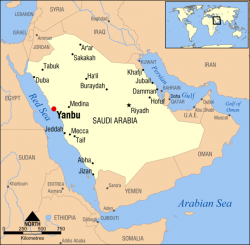
The largest oil exporter in the Middle East has teamed up with the second largest consumer of oil in the world (China) to build a gigantic new oil refinery and the mainstream media in the United States has barely even noticed it. This mammoth new refinery is scheduled to be fully operational in the Red Sea port city of Yanbu by 2014. Over the past several years, China has sought to aggressively expand trade with Saudi Arabia, and China now actually imports more oil from Saudi Arabia than the United States does. In February, China imported 1.39 million barrels of oil per day from Saudi Arabia. That was 39 percent higher than last February. So why is this important? Well, back in 1973 the United States and Saudi Arabia agreed that all oil sold by Saudi Arabia would be denominated in U.S. dollars. This petrodollar system was adopted by almost the entire world and it has had great benefits for the U.S. economy. But if China becomes Saudi Arabia's most important trading partner, then why should Saudi Arabia continue to only sell oil in U.S. dollars? And if the petrodollar system collapses, what is that going to mean for the U.S. economy?

credit: TheEconomicCollapse
Those are very important questions, and they will be addressed later on in this article. First of all, let's take a closer look at the agreement reached between Saudi Arabia and China recently.

The following is how the deal was described in a recent China Daily article....

     In what Riyadh calls "the largest expansion by any 
     oil company in the world", Sinopec's deal on  
     Saturday with Saudi oil giant Aramco will allow a 
     major oil refinery to become operational in the  
     Red  Sea port of Yanbu by 2014.
    
     The $8.5 billion joint venture, which covers an  
     area of about 5.2 million square meters, is already           under construction. It will process 
400,000 barrels of heavy crude oil per day. Aramco will hold a             62.5 percent stake in the plant while Sinopec will own the remaining 37.5 percent.

At a time when the U.S. is actually losing refining capacity, this is a stunning development.

Yet the U.S. press has been largely silent about this.

Very curious.

But China is not just doing deals with Saudi Arabia. China has also been striking deals with several other important oil producing nations. The following comes from a recent article by Gregg Laskoski....

     China's investment in oil infrastructure and refining capacity is unparalleled. And more 
     importantly, it executes a consistent strategy of developing world-class refining facilities in 
     partnership with OPEC suppliers. Such relationships mean economic leverage that could 
     soon subordinate U.S. relations with the same countries.

     Egypt is building its largest refinery ever with investment from China.

     Shortly after the partnership with Egypt was announced, China signed a $23 billion  
     agreement with Nigeria to construct three gasoline refineries and a fuel complex in  
     Nigeria.

Essentially, China is running circles around the United States when it comes to locking up strategic oil supplies worldwide.

And all of these developments could have tremendous implications for the future of the petrodollar system.

If you are not familiar with the petrodollar system, it really is not that complicated. Basically, almost all of the oil in the world is traded in U.S. dollars. The origin of the petrodollar system was detailed in a recent article by Jerry Robinson....

     In 1973, a deal was struck between Saudi Arabia and the United States in which every 
     barrel of oil purchased from the Saudis would be denominated in U.S. dollars. Under this 
     new arrangement, any country that sought to purchase oil from Saudi Arabia would be 
     required to first exchange their own national currency for U.S. dollars. In exchange for 
     Saudi Arabia's willingness to denominate their oil sales exclusively in U.S. dollars, the 
     United States offered weapons and protection of their oil fields from neighboring nations, 
     including Israel.

     By 1975, all of the OPEC nations had agreed to price their own oil supplies exclusively in 
     U.S. dollars in exchange for weapons and military protection.

     This petrodollar system, or more simply known as an "oil for dollars" system, created an 
     immediate artificial demand for U.S. dollars around the globe. And of course, as global oil  
     demand increased, so did the demand for U.S. dollars.

Once you understand the petrodollar system, it becomes much easier to understand why our politicians treat Saudi leaders with kid gloves. The U.S. government does not want to see anything happen that would jeopardize the status quo.

A recent article by Marin Katusa described some more of the benefits that the petrodollar system has had for the U.S. economy....

     The "petrodollar" system was a brilliant political and economic move. It forced the world's 
     oil money to flow through the US Federal Reserve, creating ever-growing international 
     demand for both US dollars and US debt, while essentially letting the US pretty much own 
     the world's oil for free, since oil's value is denominated in a currency that America controls 
     and prints. The petrodollar system spread beyond oil: the majority of international trade is 
     done in US dollars. That means that from Russia to China, Brazil to South Korea, every 
     country aims to maximize the US-dollar surplus garnered from its export trade to buy oil.

     The US has reaped many rewards. As oil usage increased in the 1980s, demand for the 
     US dollar rose with it, lifting the US economy to new heights. But even without economic 
     success at home the US dollar would have soared, because the petrodollar system 
     created consistent international demand for US dollars, which in turn gained in value. A 
     strong US dollar allowed Americans to buy imported goods at a massive discount – the 
     petrodollar system essentially creating a subsidy for US consumers at the expense of the 
     rest of the world. Here, finally, the US hit on a downside: The availability of cheap imports 
     hit the US manufacturing industry hard, and the disappearance of manufacturing jobs 
     remains one of the biggest challenges in resurrecting the US economy today.

So what happens if the petrodollar system collapses?

Well, for one thing the value of the U.S. dollar would plummet big time.

U.S. consumers would suddenly find that all of those "cheap imported goods" would rise in price dramatically as would the price of gasoline.

If you think the price of gas is high now, you just wait until the petrodollar system collapses.

In addition, there would be much less of a demand for U.S. government debt since countries would not have so many excess U.S. dollars lying around.

So needless to say, the U.S. government really needs the petrodollar system to continue.

But in the end, it is Saudi Arabia that is holding the cards.

If Saudi Arabia chooses to sell oil in a currency other than the U.S. dollar, most of the rest of the oil producing countries in the Middle East would surely do the same rather quickly.

And we have already seen countries in other parts of the world start to move away from using the U.S. dollar in global trade.

For example, Russia and China have agreed to now use their own national currencies when trading with each other rather than the U.S. dollar.

That got virtually no attention in the U.S. media, but it really was a big deal when it was announced.

A recent article by Graham Summers summarized some of the other moves away from the U.S. dollar in international trade that we have seen recently....

     Indeed, officials from China, India, Brazil, Russia, and South Africa (the latest addition to 
     the BRIC acronym, now to be called BRICS) recently met in southern China to discuss 
     expanding the use of their own currencies in foreign trade (yet another move away from 
     the US Dollar).

     To recap:
  • China and Russia have removed the US Dollar from their trade
  • China is rushing its trade agreement with Brazil
  • China, Russia, Brazil, India, and now South Africa are moving to trade more in their own currencies (not the US Dollar)
  • Saudi Arabia is moving to formalize trade with China and Russia
  • Singapore is moving to trade yuan
     The trend here is obvious. The US Dollar’s reign as the world’s reserve currency is  
     ending. The process will take time to unfold. But the Dollar will be finished as reserve 
     currency within the next five years.

Yes, the days of the U.S. dollar being the primary reserve currency of the world are definitely numbered.

It will not happen overnight, but as the U.S. economy continues to get weaker it is inevitable that the rest of the world will continue to question why the U.S. dollar should automatically have such a dominant position in international trade.

Over the next few years, keep a close eye on Saudi Arabia.

When Saudi Arabia announces a move away from the petrodollar system, that will be a major trigger event for the global financial system and it will be a really, really bad sign for the U.S. economy.

The level of prosperity that we are enjoying today would not be possible without the petrodollar system. Once the petrodollar system collapses, a lot of our underlying economic vulnerabilities will be exposed and it will not be pretty.

Tough times are on the horizon. It is imperative that we all get informed and that we all get prepared.

Wednesday, February 1, 2012

Current U.S.-Iran Tensions: Is there more than meets the eye...again? Reminiscent of Iraq and Libya...

Here we go again, are we that naive to think that yet again the current tensions with Iran is really about 'nukes'? Come on, it all about the precious black gold we call OIL, its always about oil. In 2000, Saddam Hussein of Iraq wanted to turn away from trading oil in U.S. dollars to euros instead. Of course that wouldn`t be allowed to befall the powerful dollar and he was subsequently attacked and removed in 2003. In 2011, Col Muammar Ghadafi of Libya envisioned to create a new Gold dinar currency, a currency that would be backed by gold, inevitably rivaling the dollar and euro and allow Ghadafi to re-price oil. It would have had serious consequences for the world financial system - i.e. the world elite, even though it would have empowered the people of Africa for once in their lives and not be dictated by the global powers into debt slaves and destitute. 


An oil field near Pol-e-Dokhtar, Iran
An oil field near Pol-e-Dokhtar, Iran; credit: RT News
Petrodollar pumping US policy on Iran, backfire looms
by: Michael T. Winter
RT News
published: 01 February, 2012, 20:18

As tensions between the US and Iran heat up, author Michael T. Winter believes the main reason behind America’s harsh stance is Tehran’s move to seek an alternative to the dollar as an oil currency.

Economic sanctions, spearheaded by the US and, less willingly, the EU could have a disastrous effect on both of their respective economies. If Iran cannot sell their oil to Europe, there are plenty of customers waiting in the wings, and if they come bearing not petrodollars, but gold and sovereign currencies, then all the better for Iran. These sanctions, if enforced, will in effect place a serious dent in the power of the petrodollar.

...At the heart of the issue is not Iran’s dubious attempt to build nuclear weapons, or even oil, but how that oil is paid for. In 1973, Richard Nixon promised King Faisal of Saudi Arabia that the US would protect Saudi Arabian oilfields from any and all interested parties seeking to forcefully wrest them from the House of Saud. It’s important to remember that in 1973, Saudi Arabia didn’t have a fraction of the military and ground forces it possesses today (almost exclusively US manufactured weapons) and the USSR was very much a threat.

In return Saudi Arabia, and by extension OPEC, agreed to sell their oil in US dollars only. As if that weren’t sweet enough, as part of the deal, they were required to invest their profits in US treasuries, bonds and bills. The real zinger is that all countries purchasing oil from OPEC had to do so in US dollars, or ‘petrodollars’.

...2001, enter Saddam Hussein. He floated a plan to sell oil for European currencies in lieu of petrodollars. Shortly after Iraq was ‘suddenly’ found to be seeking and stockpiling weapons of mass destruction – allegations spearheaded by the US. The world knows what happened, suffice it to say that Saddam is dead and Iraq is ‘back on track’, selling its oil for petrodollars once again.

...Gaddafi made a fatal error when he decided to move away from the petrodollar in favor of other currencies. This simply was not tolerated by the US. Having already played the WMD card in Iraq, something new was pulled from the US ‘regime change’ grab bag. Within a year, ‘internal’ elements rose up in rebellion against Gaddafi and now he is dead. Long live the petrodollar.

Dominique Strauss-Kahn, former head of the International Monetary Fund (IMF), suggested last year that the Euro would be a more suitable oil reserve currency than the US Dollar. Within three months of that statement, allegations of rape ruined his career, derailing his bid for the French Presidency in the process. Soon thereafter, all charges were dropped, but of course, le dommage était fait – the damage was done. Christine Lagarde, DSK’s replacement as head of the IMF sees no reason to change the current arrangement, naturellement.

The Iran situation is a little trickier. The US has sought to dismantle Iran’s regime ever since the 1979 Iranian Revolution, so this round of hostilities, while not new, reflects a new level of intensity. Why, after thirty years of hostility, has the US ratcheted up its rhetoric? As Obama stated in his recent State of the Union address, when it comes to Iran and the insistence they dismantle their nuclear program, “no options are off the table”. By stating ‘no options’ this would include nuclear deployment as a deterrent.

The answer of course is that Iran is now seeking to disengage itself from the petrodollar dynamic. In 2005, Iran sought to create an Iranian Oil Exchange, thus bypassing the US controlled petrodollar. Fear that western powers would freeze accounts in European and London banks put an end to that plan.

...Iran is breaking the back of the petrodollar. Others have tried, but Iran is succeeding. To understand how disastrous this is for the US, one must have a basic understanding of how critical a role the petrodollar plays in the economic health of the US.

...By creating the petrodollar paradigm, the US economy soared, as all countries of the world were required to amass US currency to purchase oil from OPEC nations. Sales of T-bills, securities and US bonds soared. US coffers fattened. With the US dollar as the world’s oil currency reserve, economic fortune favored the US. But with great reward comes great risk. While other countries exchanged their currency for the dollar, (forfeiting value in the process) the US simply printed more money to match their needs and purchase their oil – essentially for free. The best example is that while gasoline in the US cost $3.00 per gallon, in Europe that same gallon costs $6.00 or more.

Herein lies the danger. If Iran is successful in its bid to set up their own bourse, or oil exchange, then what need does the world have for all those US dollars? The answer is none at all. As Iran creating gold and sovereign currency partnerships with India, China, South Korea and Russia, the hegemony of the petrodollar will be destroyed.

The resulting sell-off of US dollars, T-bills, securities, bonds and assets will flood the already swollen world economy with even more useless dollars, ultimately devaluing it into a position where hyper-inflation becomes a risk.

So, while the US government sabre-rattles and prattles on and on about nuclear weapons and the threat Iran poses to the Middle East, the thin veneer of lies spouted by the elite controlled media is being stripped away, revealing the truth of their warmongering rhetoric.

...The US, by their foolish insistence on enforcing embargoes and sanctions against Iran, is hastening the end of the petrodollar and ushering in the age of US dollar hyper-inflation. A practical example: One loaf of bread in a healthy economy is $1.00. In an inflationary economy it’s $1.75. In a hyper-inflationary economy, $500.00.


Bullies may be large and dangerous, but rarely are they intelligent.

Damocles wisely vacated the throne of Dionysius before the sword fell upon his head, but the US is foolishly refusing to step down from their economic dais in spite of the catastrophic effect current policy direction will mean for US citizens and the world economy.

Michael T. Winter

The statements, views and opinions expressed in this article are solely those of the author and do not necessarily represent those of RT.

(click here to read the full article by Michael Winter)


Additional info:The Real Reasons Why Iran is the Next Target: The Emerging Euro-denominated International Oil Marker
by William Clark
www.globalresearch.ca