Showing posts with label War on Iran. Show all posts

Wednesday, March 28, 2012

Off to Iran: An amphibious assault group and 2,000 Marines...already along with 2 carrier strike groups, is invasion imminent?

US gears up for land operation in Persian Gulf?
RT News
Published: 28 March, 2012, 18:40

A helicopter flies near US ship Iwo Jima (AFP Photo / Johan Ordones)
A helicopter flies near US ship Iwo Jima 
(AFP Photo / Johan Ordones) 
The US is sending an amphibious assault group and a couple of thousand US Marines to the Persian Gulf. With another US carrier making its way to Iran’s doorstep, US military still insist that this is a “regularly scheduled deployment”.

The Iwo Jima Amphibious Ready Group is comprised of amphibious assault ship USS Iwo Jima, amphibious transport dock USS New York, and amphibious dock landing ship USS Gunston Hall. It is also reinforced with an atomic submarine and a marine helicopter squadron.
The group, which is “a versatile sea-based force that can be tailored to a variety of missions,” left port on Tuesday and is heading to the Gulf, the US Navy says.

Over 2,000 US Marines are to come on board Iwo Jima when the group makes a stop in North Carolina.

Many of those marines are veterans of ground combat in Iraq and Afghanistan making their first shipboard deployment, dailypress.com points out.

The US already has an amphibious group with an expeditionary marine unit in the Gulf region. The Makin Island Amphibious Ready Group was deployed there in January, after Iran’s threat to close the Strait of Hormuz, a crucial route that allows the delivery of around 20 per cent of the world's oil.

Iran has repeatedly reiterated this threat over the last six month, while the US and its NATO partners kept increasing their naval presence in the region.

The US is aware that Iran has enough resources to mine the strait within a relatively short period of time. General Michael Dempsey, Chairman of the US Joint Chiefs of Staff, said earlier that the US must be prepared to reopen the Strait of Hormuz by force.

In March, the US sent another four minesweepers to join those already deployed there, bringing the overall number in the region to eight.

Two US aircraft carrier battle groups, headed by the USS Carl Vinson and USS Abraham Lincoln, are patrolling the waters around the strait. Another carrier, USS Enterprise, is expected to join them next month.

Although many US officials, including President Obama, still insist on using diplomacy and sanctions, they admit that “all options are on the table” to force Iran to drop its nuclear program.
Meanwhile, Israel – the closest US ally in the region – considers nuclear Iran to be “an existential threat,” which needs to be dealt with as soon as possible. Last week, Israel’s Defense Minister Ehud Barak, spoke of a three-month deadline for Iran to give up its nuclear ambitions or face imminent attack.

Rand Paul to the rescue: Blocks Senator Reid`s new Iran sanctions bill he secretly tried to pass by unanimous consent

Rand Paul Stands Between US War With Iran

Senator blocks sanctions bill saying it could be used as a means to go to war

Steve Watson
Infowars.com
March 28, 2012

Rand Paul has effectively single handedly blocked a bi-partisan bill to place yet more crippling economic sanctions on Iran, by demanding an amendment to prevent the White House using the legislation as an authorization to attack the country.

Senate Majority Leader Harry Reid (D-NV) wanted to immediately pass the sanctions bill by unanimous consent Tuesday. However, Paul intervened and blocked it, in order to ensure that unauthorized use of military force against Iran does not transpire.


Paul’s one sentence amendment reads: “To clarify that nothing in the Act shall be construed as a declaration of war or an authorization of the use of force against Iran or Syria.”

Our Founding Fathers were quite concerned about giving the power declare war to the Executive,” Paul said on the Senate floor. “They were quite concerned that the Executive could become like a king.”

Before sending our young men and women into combat, we should have a mature and thoughtful debate over the ramifications of and over the authorization of war and over the motives of the war,” he added.

Paul noted that in the lead up to the NATO led conflict in Libya, several Senators, including John McCain (R-Ariz.) and Lindsey Graham (R-S.C.), were beating the war drums. The Kentucky Senator warned that the same rhetoric is now being used in relation to Iran and Syria.

Many in this body cannot get boots on ground fast enough in a variety of places, from Syria to Libya to Iran,” said Paul. “[I] urge that we not begin a new war without a full debate, without a vote, without careful consideration of the ramifications of a third or even a fourth war in this past decade.”

Watch Rand Paul address the Senate:

The bill, S. 2101, aims to level broad sanctions at Iran and any persons and firms who supply Iran with technologies. Under the legislation, firms traded on the US stock exchanges must disclose any Iran-related activities and could have their assets frozen.

The legislation passed through the Senate banking committee in February, and was also passed in the House.

Reid said he opposed Paul’s request for the amendment, claiming that the sanctions bill had nothing to do with war and could even help prevent conflict by “preventing Iran from obtaining nuclear weapons, threatening Israel and further terrorizing other parts of the world.”

I really am terribly disappointed,” said Reid. “There is nothing in the resolution that talks about war, in fact it’s to the contrary. This is not a declaration of war or anything in the neighborhood of that.”

Reid now has to formally decide whether to cut a deal by allowing Paul’s amendment to be considered, or to attempt to defeat the senator’s objection by obtaining 60 votes in his favor.
—————————————————————-
Steve Watson is the London based writer and editor for Alex Jones’ Infowars.net, and Prisonplanet.com. He has a Masters Degree in International Relations from the School of Politics at The University of Nottingham in England.

Monday, March 26, 2012

Blix: US, Israel source most of IAEA allegations (Press TV)

Press TV
Sun Mar 25, 2012 1:23PM GMT


Former head of the International Atomic Energy Agency (IAEA), Hans Blix (file photo) 
A former chief of the International Atomic Energy Agency has challenged a report delivered by the IAEA in November on Iran’s nuclear activities, pinpointing that the agency receives unverified intelligence, mostly from the US and Israel.

In an exclusive interview with Qatar-based news network, Al Jazeera, on Saturday, Hans Blix stated that the IAEA received information from a variety of sources, mostly from the United States and Israel.

“My view is that they must assess it very carefully and critically because otherwise they can be pulled by their noose,” he asserted.

“I remember from inspections in 2002 and 2003 that there was a famous document that allegedly to be a contract between Iraq and Niger for the import of yellow cake of uranium oxide quoted by [former US] President [George W.] Bush in his State of the Union message. The IAEA had it for one day and concluded that it was a forgery. [Former IAEA head, Mohamed] ElBaradei then announced it was not authentic. That shows how careful you have to be,” Blix stated.

The UN nuclear agency’s current Director General Yukiya Amano issued a report on November 8, accusing Iran of pursuing military objectives in its nuclear energy program.

Iran dismissed the report as “unbalanced, unprofessional, and prepared with political motivation and under political pressure mostly by the United States.”

Tehran argues that, as a signatory to the nuclear Non-Proliferation Treaty and a member of the IAEA, it is entitled to develop and acquire nuclear technology for peaceful purposes.

The IAEA has conducted numerous inspections of Iran's nuclear facilities, but has never found any evidence of diversion in the country's nuclear activities.

Regarding the Western hype over Iran’s Parchin military site, Blix said, “They (the inspectors) have been there several times,” adding, “Parchin is a military site with thousands of buildings. Any country would be reluctant to let international inspectors go anywhere near their military sites.”

“In a way the Iranians have been more open [about their nuclear activities] than most other countries would be,” he added.

Blix also questioned the Israeli warnings of Iran’s bid to build a nuclear bomb, saying according to Tel Aviv, Tehran should have had a nuclear bomb a long time ago.

“If you ask the Israelis, it (the Iranian nuclear bomb) is just around the corner all the time, but they have said that for years, so I think one ought to be a bit cautious about it,” he said.

The former IAEA chief further criticized Tel Aviv’s rhetoric regarding a potential bid to launch a strike on Iran.

"When I hear [Israeli Prime Minister] Netanyahu saying it’s not a question of days or weeks, but also not years, I think that sounds like a terrible threat," he said.

Israel, always vociferous in its accusations against Iran’s nuclear energy program, is itself widely known to possess between 200 and 400 nuclear warheads. Tel Aviv, however, refuses to allow its nuclear facilities to come under international regulatory inspections and rejects all the regulatory international nuclear agreements.

Blix also called on the Western powers to alter their “menacing” and “threatening” attitude toward Iran so that the standoff over Tehran’s nuclear energy program might be resolved.

“Very frequently I think the western world has been unwise in the way they treat Iran. They say that Iran must behave itself as it were a minor they were talking to” Blix said, adding that they should not expect Tehran to "kneel" before them as this is “a hopeless way” of arriving at an agreement.

Blix further called on the Western states to support Iran’s bid to join the World Trade Organization (WTO) and assist the Islamic Republic’s civilian nuclear program.

The former IAEA chief also condemned the assassination of Iranian nuclear scientists, describing such acts as “terrible” and “counterproductive” as they “blur the border between civilians and combatants.”

MP/HN/HMV/IS

Friday, March 16, 2012

War with Iran, sure seems like its not a matter of 'if' but 'when'

Gunboats, Super-Torpedoes, Sea-Bots: U.S. Navy Launches Huge Iran Surge
WIRED
Spencer Ackerman
March 16, 2012 | 11:55 am
The Navy practices a mock boarding operation on the U.S.S. Princeton in the Middle East, 2010. Photo: U.S. Navy Fifth Fleet 

Sending more aircraft carriers to the waters near Iran, it turns out, was just the start. Yes, the U.S. currently has more seapower aimed at Iran in the Persian Gulf than in the fleets of most countries on Earth, Iran included. But that was just the Navy cracking its knuckles.

In the next few months, the Navy will double its minesweeper craft stationed in Bahrain, near Iran, from four to eight. Those ships will be crucial if Iran takes the drastic step of mining the Strait of Hormuz, one of the global energy supply’s most crucial waterways. Four more MH-53 “Sea Stallion” helicopters, another minesweeping tool, are also getting ready for Bahrain, to give the U.S. Fifth Fleet early warning for any strait mining.

Then the Navy will prepare to get closer to Iranian shores. Much closer. It’s got five close-action patrol boats in the Gulf right now. Once the Coast Guard returns three that the Navy loaned out, the Navy will have five other patrol craft in the United States. All those boats are getting retrofitted. With Gatling guns. And missiles.

Sure, the guns aboard the two aircraft carriers currently near Iran are the seapower equivalent of high-powered, long-range rifles. “But maybe what you need is like a sawed-off shotgun,” capable of doing massive damage from a closer distance, said Adm. Jonathan Greenert, the Navy’s senior officer. All 10 of those patrol boats, Greenert told reporters at a Friday breakfast in Washington, will get strapped with the Mk-38 Gatling Gun and should make it to the Gulf next year. (Though, alas, they won’t have the Gatling/laser gun mashup BAE Systems is working on.) They’ll also get close-range missiles that can hit Iranian shores from four miles away — the same kinds Navy SEALs use.

Consider it Teddy Roosevelt’s gunboat diplomacy for the 21st century. Over plates of greasy eggs and bacon, Greenert outlined a plan to give the U.S. what is almost certainly the biggest stick the Navy has ever had in the Gulf. The idea, which he didn’t make explicit, is to convince Iran to think long and hard before ever messing with either the U.S.’s Arab allies across the Gulf or disrupting a narrow transit point through which a fifth of the world’s energy supplies flow.

Add up the aircraft carriers, the Gatling-packing patrol craft, the Orions, the Sea Stallions and the minesweepers, and Greenert still isn’t finished with the surge. Then come the new, advanced torpedoes that can compensate for the “turpidity [and] particulate” drags of the Gulf waters. And the drone subs — or, as Greenert put it, “some underwater unmanned neutralization autonomous units” to help hunt mines. And every Navy ship that sails through the strait will come equipped with new, modular “infrared and electro-optical” visibility systems that clarify the foggy Gulf even at night. Extra spare parts and contractor crews will sustain the surge.

And if all that wasn’t enough, Greenert disclosed that he and Defense Secretary Leon Panetta will soon ask themselves if the Navy needs to rotate more aircraft carriers to the Gulf. That decision, so important that it’s Panetta’s to make, will come “in the next few months.”

“I looked in every domain, undersea, surface and air,” Greenert said, “to make sure that we’re doing our best for the guys that are over there.”

Even with the prospect of an Israeli bombing campaign lingering overhead, the Navy has already proven it can get Iran to back off its bellicose rhetoric. Tehran hasn’t attacked the U.S. carriers, and it hasn’t mined the strait. Yet.

Greenert suggested that Iran’s naval forces are too sensible to actually challenge the vastly superior American force nearby. The regular Iranian navy is “professional, courteous [and] good mariners,” he said. Even the radical Iranian Revolutionary Guard Corps isn’t “ramping up” in the Gulf and keeping its activities “normal.”

Perhaps true. And once the Navy’s surge forces all get into the Persian Gulf, the Iranian sea forces might not have any choice, if they want to continue existing. But if Iran’s pattern of miscalculation continues, then the larger Navy force nearby might be a provocation — and will have to end a fight quickly if it breaks out.

Wednesday, March 14, 2012

US warns Iran: 'Agree to talks or be bombed,' but the case for war seems set, not a "matter of if but when"

Clinton, Lavrov, Ahmadinejad - Reuters and AP - March 14, 2012
U.S. Secretary of State Hillary Clinton, Russian 
Foreign Minister Sergei Lavrov, and Iranian 
President Mahmoud Ahmadinejad. 
Photo by Reuters and AP
Report: U.S. asked Russia to warn Iran of 'last chance' to avoid military strike
Haaretz
Published 11:58 14.03.12; Latest update 11:58 14.03.12

Clinton reportedly told her Russian counterpart to rely message to Tehran that it must engage in talks with world powers or face a military strike within months, according to Russian daily Kommersant.

The United States has asked Russia to deliver an ultimatum to Iran, warning the Islamic Republic that it has one last chance for talks before a military strike, the Kommersant daily quoted Russian diplomats as saying on Wednesday.


According to the Russian newspaper, U.S. Secretary of State Hillary Clinton asked her Russian counterpart Sergei Lavrov in New York on Monday to tell Tehran that it has one last chance to solve the conflict peacefully by making progress in the talks with the P5+1 group - United States, Britain, France, Russia, China, and Germany. Otherwise, an attack on Iran's nuclear facilities will occur within months, the diplomats said.

The report in Kommersant did not give further details regarding the kind of military action the U.S. was threatening, but quoted Russian diplomats at the UN as saying they believe that it is a "matter of when, not if" Israel would strike Iran's nuclear facilities.


The aircraft carrier USS Enterprise (CVN 65) (U.S. Navy photo by Mass Communication Specialist 2nd Class Brooks B. Patton Jr./Released) on to Iran, RT NEWS

Last week, Clinton said that there is still space for diplomacy to resolve Iran's nuclear standoff with the West shortly after European Union foreign policy chief Catherine Ashton announced that the P5+1 group agreed to restart talks with Iran. A time and venue of the talks has yet to be set.

Prime Minister Benjamin Netanyahu, in a series of television interviews, said last week that an attack on Iran's nuclear facilities could take place within months.

"We're not standing with a stopwatch in hand," he said. "It's not a matter of days or weeks, but also not of years. The result must be removal of the threat of nuclear weapons in Iran's hands."

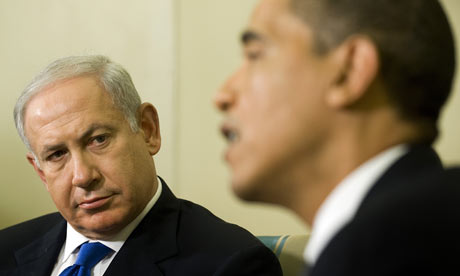
Netanyahu met with U.S. President Barack Obama last week and tried to pressure him to harden his tone on Iran.

Netanyahu told Obama that he had not yet made any decision about whether to attack Iran's nuclear facilities, though he made it clear he did not rule out such a move in the future. In statements to the press both before and after the meeting Netanyahu said Israel has the sovereign right to defend itself against Iran.

Monday, March 12, 2012

Yeah...,we are addicted to WAR

RT News
US: Turning war-fear into warfare
RT NEWS
Published: 10 March, 2012, 11:49

Ever since its creation, the US has had a role to play in combat operations worldwide. Today the country’s public opinion is dominated by warfare, making American society all-too-easily manipulated and turned against practically any country.
The US has a strong record of persuading the public that war is the only way. A military industrial complex worth billions of dollars is largely America’s driving force. Deeply rooted in the system, it would serve no purpose if there was no one to fight.

If there were no more enemies left, there would be a loss of a sense of mission,” anti-war activist and journalist Don Bebar told RT.


U.S. Military Academy cadets wave a flag in the stands prior to the 112th Army-Navy football game in Landover, Maryland. (REUTERS/Jonathan Ernst)

 
Serving Americans are on permanent stand-by to deploy to battle zones on command.
The US army flag has 183 campaign ribbons on it. Those 183 ribbons each represent wars,” Iraq war veteran Matthis Chiroux from New York shared with RT.

When you compare that to the 236 years that we’ve actually been around as a country, you’re talking about a war on average of once every year and three months,” he calculated. As a consequence of the American bellicosity in general, Matthis Chiroux is now soothing his nerves in company with 170,000 American soldiers suffering from post traumatic stress disorder.

The US always has a bone to pick with one enemy after another. For nearly half a century it was the Soviet Union.

The communist threat was the most useful enemy. Where legitimate, and where completely fantastical, it was always available as a global conspiracy against which to justify anything,” Roots Action campaigner David Swanson told RT.

With the Cold War declared over, the list keeps expanding to smaller antagonists.
So it was with Saddam Hussein’s Iraq in 1991, when then President George H. W. Bush Sr. announced that “Allied forces began an attack on military targets in Iraq and Kuwait.”
Or with the former Yugoslavia, to which former President Bill Clinton signed a sentence in 1999 by announcing that the American Air Force was conducting “Air strikes against Serbian forces.”

Then it was ex-President George W. Bush, who was let off the leash after 9/11 terror attacks and announced a global War on Terror symbolized by Al-Qaeda. He started by invading Afghanistan in 2001 and continued with the invasion of Iraq in 2003.

In 2003, the US Air Force was “Striking selective targets of military importance to undermine Saddam Hussein’s ability to wage war,” announced George W. Bush, meaning that waging wars is an exclusive privilege of the chosen mighty ones.

Ultimately, it has been current President Barack Obama, who was elected on promises to end wars, but now looks forward to military conflict with Iran after lending a hand in toppling the regime of Colonel Muammar Gaddafi in Libya. As in previous cases, last spring he made a characteristic “We hit Gaddafi’s air defenses” statement on the American TV.

With a defense budget that surpasses the military expenditure of all other countries combined, no other nation drums up war as consistently as America.

While people are still responding and recovering from the violence that’s been committed in one place, or even in the same place, we’re launching new operations and more atrocities in different parts of the world,” acknowledged war correspondent Keith Harmon Snow.

So Fox News cannot but reiterate that Iran is the biggest threat, Syria is a minor threat, Russia is a traditional threat and China is an emerging threat.

That makes America's top brass state that a strike on Tehran is in the planning stages.
It also makes the US President Obama latest quest for diplomacy with Iran over its nuclear program look derisive in the face of a pending military confrontation.

Year in, year out, Americans are convinced that the US has to remain on the defensive.
We’re petrified of death by terrorism. Shoot, I think a lot of Americans wish we’d spend more money on war,” veteran Matthis Chiroux confessed.

Finding the next target is never difficult.

Campaigner David Swanson says “We are inventing the nation of Iran as an enemy, as a threat to the United States, as a possessor of nuclear weapons it does not possess, a nation that has not attacked another in literally centuries, and has no capability or desire to attack ours.

RT's Anastasia Churkina asked people on the streets of New York “Which country is the US going to be in a war with next?”

The most common answer she got was “Iran.”

The US has been picking and choosing which countries to intervene in for centuries. As the list of nations the US loves to hate expands, the concept that no war at all is also an option seems to have been forgotten.

Possible FALSE FLAG ALERT: The oldest living carrier USS Enterprise on its 'final' journey to the Arabian Sea 'aka' Iran

Aircraft Carrier Enterprise Sets Off On Final Journey – Direction Iran
Zero Hedge
Submitted by Tyler Durden on 03/11/2012

Today at noon Eastern, the storied aircraft carrier Enterprise, aka CVN-65, left its home port of Naval Station Norfolk one final time for its final voyage with a heading: Arabian Sea, aka Iran. There in a week it will join CVN 72 Lincoln and CVN 70 Vinson, as well as LHD 8 Makin Island, all of which are supporting any potential escalation of "hostilities" in the Persian Gulf region. As a reminder, back in January we learned that the Enterprise's final voyage will be in proximity to Iran, and in the meantime, the aircraft carrier held extended drills off the Florida coast to attack a "faux theocracy" consisting of fundamentalist "Shahida" states. Why the Arabian Sea in about 7-10 days will be home to not two but three aircraft carriers and a big deck amphibious warfare ship is very much an open question, although we may have some thoughts.

More:

     Thousands of sailors will deploy today from Norfolk on the USS Enterprise for the last  
     time on Sunday.

     Nearly 5,500 Sailors aboard the ships of the Enterprise Carrier Strike Group (ENT CSG)     
     are scheduled to deploy from Naval Stations Norfolk and Mayport, Fla., March 9, 11 and 
     12, to support operations with the U.S. Navys 5th and 6th Fleets.

     The aircraft carrier USS Enterprise (CVN 65), commanded by Capt. William C. Hamilton 
     Jr., will depart from Naval Station Norfolk for the ships 22nd and final deployment March  
     11.

CVN 65 will not be alone:

     After the Enterprise leaves Sunday, three Norfolk-based guided-missile destroyers 
     will head out Monday — the USS Porter, USS Nitze and USS James E. Williams.

     The strike group is commanded by Rear Adm. Ted Carter Jr.

     Carrier Air Wing 1, based at Naval Air Station Oceana in Virginia Beach, will be 
     embarked aboard the Enterprise.

     The Enterprise was launched September 24, 1960, by Newport News Shipbuilding and 
     Drydock Co. and commissioned November 25, 1961.

     Its record of high-profile service began with the Cuban Missile Crisis in 1962. Since then, 
     it has served in countless missions around the world.
     ...
     The aircraft squadrons of CVW 1 embarked aboard Enterprise are: Strike Fighter 
     Squadron (VFA) 11 Red Rippers, VFA 136 Knighthawks, VFA 211 Fighting 
     Checkmates, Marine Fighter Attack Squadron (VMFA) 251 Thunderbolts, Carrier 
     Airborne Early Warning Squadron (VAW) 123 Screwtops, Carrier Tactical Electronic 
     Warfare Squadron (VAQ) 137 Rooks, Fleet Logistics Support Squadron (VRC) 40 
     Rawhides, and Helicopter Anti-submarine Squadron (HSL) 11 Dragon Slayers.

Some pictures released minutes ago from Enterprise's final deployment:


Finally, this is how congested the Arabian Sea looks right about now, where two carriers and one assault ship are currently located, via Stratfor.


Sunday, March 11, 2012

Israeli attack on Iran would have a "devastating effect" on Israel itself (CBS 60 Minutes interview)

Ex-Israeli spymaster: Iranian response to an Israeli attack would be devastating
Meir Dagan, who formerly headed the Mossad, Israel's foreign intelligence service, says military action against Iran will not stop Iran from attaining the bomb.
Haaretz
Published: March 12, 2012

Meir Dagan
Ex-Mossad chief Meir Dagan, photo by
Nir Keidar, Haaretz
Former head of the Mossad, Meir Dagan says that an Israeli attack on Iran would lead to a missile attack on Israel that would have a “devastating impact” on the ability of Israeli’s to continue its daily life, in an interview that aired on Sunday on CBS’s 60 Minutes.

According to Dagan, an attack will start a regional war. Adding: “And wars, you know how they start. You never know how you are ending it.”

“I think that Israel will be in a very serious situation for quite a time,” Dagan told 60 Minutes’s Lesley Stahl, when asked about a possible Israeli response to an Israeli attack on Iran’s nuclear program.

Dagan also expressed skepticism over the effectiveness of an Israeli attack on Iran’s nuclear program to deny Iran nuclear weapons. Unlike what has been reported in the past, according to Dagan there aren’t four Iranian nuclear sites but “dozens.”

Dagan said that no military attack could halt the Iranian nuclear project; rather an attack could only serve to delay it.

In his first interview to an American media outlet Dagan said he did not believe now is the time to attack Iran’s nuclear program.


Dagan said the regime in Iran is a rational one. When asked whether Iranian President Mahmoud Ahmadinejad was rational, Dagan responded that he was.

“Not exactly our rational, but I think he is rational,” Dagan said. Adding that though their rationality was different from the Western way of thinking, “they are considering all the implications of their actions…They will have to pay dearly…and I think the Iranians at this point in time are…very careful on the project,” says Dagan. “They are not running…”

Dagan believes that instead of military action the West should concentrate on instigating regime change in Iran. “It’s our duty to help anyone who likes to present an open opposition against their regime in Iran,” says Dagan.

When asked by 60 Minutes whether Israel had supported the youth groups that held protests across Iran after the last round of Iranian elections, Dagan refused to answer.

Dagan said he trusted the U.S. and President Barack Obama’s resolve to stop the Iranian nuclear program. President Obama said “the military option is on the table and he is not going to let Iran become a nuclear state and from my experience, I usually trust the president of the U.S,” he says.

“The issue of Iran armed with a nuclear capability is not an Israeli problem; it’s an international problem.”

During the interview Stahl suggested that it seemed he was advocating Israel wait and have the U.S. attack Iran’s nuclear sites. Dagan replied: “If I prefer that someone will do it, I always prefer that Americans will do it,” he says.

Saturday, March 10, 2012

Naval blockade of Iran needed says US Senator - Really? Congress is just getting funnier by the day...

Senator Levin Calls for Naval Blockade of Iran
Kurt Nimmo
Infowars.com
March 10, 2012

US Senator Carl Levin, Infowars
Democrat Senator Carl Levin, chairman of the Armed Services Committee, has called for an international naval blockade of Iranian oil exports. He said the action should be taken before the U.S. and Israel attack Iran.


“I think (these are) options that whoever is willing to participate should explore, including Israel and including the United States,” Levin told C-Span on Friday.

A naval blockade is considered an act of war.

In order to minimize the impact on world oil prices, Levin said alternative oil supplies should be put into place before the blockade. Iran is the number two OPEC oil producer. The EU has agreed on an oil purchase embargo scheduled to begin on July 1.

If sanctions do not force Iran to drop its nuclear program, a “strike is likely” within “months,” Levin warned. He said an Israeli missile system installed by the United States had minimized Iran’s ability to retaliate against Israel after an attack.

President Obama and the impending Middle-East wars

credit: Inowars
Obama Plans More Middle East Wars
Stephen Lendman
Infowars.com
March 10, 2012

Cheerled by America’s major media scoundrels, war looks increasingly likely. Syria and Iran both are targeted.

Imagine the potential catastrophic consequences, especially if nuclear weapons are used. They were before. Why not now. The prospect’s chilling.

In his Der Ring des Nibelungen operas (the Ring), Richard Wagner portrayed his apocalyptic version musically. Gotterdammerung (Twilight of the Gods) prophesied the end of the world.
Einstein suggested it, saying he didn’t know what WW III weapons would be used, “but World War IV will be fought with sticks and stones.”

Around the same time, Bertrand Russell warned:
Shall we put an end to the human race, or shall mankind renounce war” and live in peace. The stark choice is clear. The wrong one suggests consequences too grim to imagine.

It’s terrifying to imagine nuclear bunker-buster bombs used against underground targets. Whatever the physical damage, irradiating vast areas could kill millions, and set a precedent to keep using them like king-sized hand grenades.

A 13,600-kilogram bunker-buster’s being developed. Called “the massive ordnance penetrator,” allegedly it can smash through 65 meters of reinforced concrete before detonating.
Defense Secretary Panetta said work on an array of military options are being considered if sanctions don’t curb Iran’s nuclear program. He added they’ve been underway “a long time,” and Washington’s “weighing all of the ramifications of how best to deal with Iran.”
It’s hard imagining the mindset of hawkish policy makers. Grave consequences aren’t considered, let alone waging permanent wars against nonbelligerent countries threatening no one.

Yet Obama’s fulfilling Dick Cheney’s promise about wars not ending in our lifetime. Former CIA Director James Woolsey said America’s “engaged in World War IV, and it could continue for years….This fourth world war, I think, will last considerably longer than either World Wars I or II did for us.”

In his September 11, 1990 joint session of Congress speech, GHW Bush called it a “New World Order” ahead of Operation Desert Storm.

In its 2006 Quadrennial Defense Review (QDR), the Pentagon called it the “long war.” It rages daily for unchallenged world dominance, no matter the potentially devastating consequences...

(click here to read the full article)

Thursday, March 1, 2012

Wow, Netanyahu DEMANDS Obama to commit to Iran War

Israeli PM demands Obama commit to military action if Iran sanctions fail
Binyamin Netanyahu pressing for explicit threat from US ahead of crucial meeting with Obama next week in Washington

Chris McGreal
The Guardian
Thursday 1 March 2012 12.43 EST

Barack Obama and Benjamin Netanyahu
Israeli officials say that Binyamin Netanyahu is not happy with Obama`s
'vague assertion' that all options are on the table in dealing with Iran. 
Photograph: Jim Watson/AFP/Getty Images
(Washington) Israel is pressing Barack Obama for an explicit threat of military action against Iran if sanctions fail and Tehran's nuclear programme advances beyond specified "red lines".

Binyamin Netanyahu, the Israeli prime minister, is expected to raise the issue at a White House meeting on Monday after weeks of intense diplomacy in which Obama has dispatched senior officials – including his intelligence, national security and military chiefs – to Jerusalem to try and dampen down talk of an attack.

Diplomats say that Israel is angered by the Obama administration's public disparaging of early military action against Iran, saying that it weakens the prospect of Tehran taking the warnings from Israel seriously.

The two sides are attempting to agree a joint public statement to paper over the divide but talks will not be made easier by a deepening distrust in which the Israelis...

(Click here to read the full article)

Saturday, February 25, 2012

Consensus of American Intelligence community says Iran not seeking nukes but IAEA reports Iran significantly enriching uranium, so...whose right or is it dis-information?

U.S. does not believe Iran is trying to build nuclear bomb
By Ken Dilanian, Los Angeles Times
February 23, 2012, 6:11 p.m.

Despite the recent US and Israeli hype created around Iran’s nuclear program, a report by American intelligence agencies indicates that Tehran is not seeking to build nuclear weapons.

The most recent report on Iran’s nuclear program “represents the consensus of 16 US intelligence agencies,” the Los Angeles Times reported Thursday.

The “highly classified” intelligence assessment was reportedly circulated among US policymakers early last year.

The US National Intelligence Estimate (NIE) report published in December 2007 also confirmed with “high confidence” the peaceful nature of Iran’s nuclear program.

The Los Angeles Times article notes that:

    "A highly classified U.S. intelligence assessment circulated to policymakers early last year   
    largely affirms that view, originally made in 2007. Both reports, known as national intelligence 
    estimates, conclude that Tehran halted efforts to develop and build a nuclear warhead in  
    2003.

    The most recent report, which represents the consensus of 16 U.S. intelligence agencies,  
    indicates that Iran is pursuing research that could put it in a position to build a weapon, but 
    that it has not sought to do so.

    Although Iran continues to enrich uranium at low levels, U.S. officials say they have not seen  
    evidence that has caused them to significantly revise that judgment. Senior U.S. officials say 
    Israel does not dispute the basic intelligence or analysis."


(click here to read the full article)


But it was reported by the IAEA on Fri., Feb 24, 2012 that:

"Iran has sharply stepped up its controversial uranium enrichment drive, the United Nations’ nuclear agency said on Friday in a report that will further inflame Israeli fears that the Islamic Republic is pushing ahead with an atomic weapons program, as Russia accused the West of seeking “regime change” in Iran.

...“The Agency continues to have serious concerns regarding possible military dimensions to Iran’s nuclear program,” the Vienna-based U.N. body said in a quarterly report about Iran issued to its member states, according to Reuters.

...The confidential IAEA report said Iran has, since late last year, tripled output of uranium refined to a level that brings it significantly closer to potential bomb material, an official familiar with the agency’s probe said."

Related Articles and sources:
New IAEA Report Hypes Fear on Iran’s Nuclear Program
U.S. does not believe Iran is trying to build nuclear bomb
Iran: IAEA report proves 'peaceful nature' of nuclear program
IAEA says Iran expands nuke work; Russia says West seeks ‘regime change’ in Tehran

Monday, February 20, 2012

BREAKING: U.S. General Dempsey - 'Iran not after nukes'

If the U.S. Chairman of the Joints Chiefs of Staff says Iran is not after nukes, what more conclusive proof do you need? It just proves that the war mongers and neocons who love war and conflict (and hugely profit from it) along with Israel are the main pushers for this conflict. And who pays the price, our loyal soldiers and ordinary citizens.

US Gen. Dempsey: Iran rational actor, not after nukes
Press TV
February 20, 2012

Chairman of the U.S. Joint Chiefs of Staff Martin Dempsey, Credit: PressTV
A top US military official has described Iran as a rational actor in the international arena, stating that the Islamic Republic is not after producing nuclear weapons.

Speaking in a nationally televised interview with the CNN’s “Fareed Zakaria GPS” show on Sunday, Chairman of the US Joint Chiefs of Staff General Martin Dempsey said, “We are of the opinion that Iran is a rational actor.”

Dempsey pointed out that US officials aren't convinced Iran has decided to build atomic armaments.

“We also know, or we believe we know that Iran has not decided to make a nuclear weapon,” General Dempsey said.

Elsewhere in his remarks, the top US general also described any Israeli attack on Iran as “destabilizing.”

“It’s not prudent at this point to decide to attack Iran,” General Dempsey said, adding that the US government is confident the Israelis “understand our concerns.”

The remarks come as Israeli officials have ramped up their war rhetoric over the past few weeks, threatening Iran with military strikes in case the US-led Western sanctions against the country fail to force Tehran to halt its civilian nuclear program.

Israeli Foreign Minister Avigdor Lieberman said on February 9 that, “Israel has a large selection of ways, when the world of international sanctions fails to persuade Iran to halt its nuclear program.”

There is growing worry in Israel, however, about the grave consequences of any Israeli attack against the Iranian nation.

“The whole region will go up in flames. Thousands of rockets will fall on Israel. In the initial days, hundreds of them will fall on Tel Aviv. Then we'll be in a war that goes on for months. The economy will crash. Tel Aviv will become a frontier town,” reported leading Israeli daily Ha’aretz on February 11, quoting a senior opposition member of the regime.

Despite the widely publicized claims by the US, Israel and some of their European allies that Iran's nuclear program may include a military aspect, Iran insists on its civilian nature, arguing that as a signatory to the nuclear Non-Proliferation Treaty (NPT) and a member of the International Atomic Energy Agency (IAEA), it has the right to develop and acquire nuclear technology for peaceful purposes.

The IAEA has conducted numerous inspections of Iran's nuclear facilities but has never found any evidence indicating that Tehran's civilian nuclear program has been diverted towards nuclear weapons production.

This is while the Israeli regime is widely known to possess between 200 and 400 nuclear warheads. Furthermore, Tel Aviv refuses to allow its nuclear facilities to come under international regulatory inspectors and rejects any international nuclear regulatory agreements.

MP/ MB/HJL

Tuesday, February 14, 2012

Sheikh Imran Hosein on the waging imminent global war - MUST WATCH!!!

Sheikh Imran interview with Morris Herman - Israel takes the US to its End.

Uploaded by icemaker1990 on Jan 26, 2012
http://youtu.be/4uztRPHgAd4

Morris Herman`s YouTube Channel: http://www.youtube.com/user/108morris108?feature=watch
Sheikh Imran Hosein: http://imranhosein.org/

Imran Nazar Hosein is a leading International Islamic Philosopher, Scholar and author, specialising in world politics, economy, eschatology , modern socio-economic/political issues and expert on international affairs. He is best- selling author of Jerusalem in the Qur'an. Imran Nazar Hosein was born on the Caribbean island of Trinidad in 1942 to parents whose ancestors had migrated from India as indentured labourers. He studied Islam, Philosophy and International Relations at several universities and institutions of higher learning. Among them are al-Azhar University in Cairo, Egypt, the Institute of International Relations of the University of the West Indies in Trinidad, the University of Karachi in Pakistan, the Aleemiyah Institute of Islamic Studies in Karachi, Pakistan, and the Graduate Institute of International Studies in Geneva, Switzerland.

[Video property and courtesy of IceMaker1990`s Channel & 108morris108`s Channel, please give proper credit and citation] 


Copyright Disclaimer [Rubaiat`s Blog]:
The use of incidental copyrighted material is covered under 'Fair Use' (Copyright Act, 1976) Title 17 U.S.C Section 107, with particular emphasis on such use for educational and non-profit purposes. Under Sec. 107 of the Copyright Act (1976), allowance is made for 'Fair Use' for purposes such as criticism, comment, news reporting, teaching, scholarship, and research. Fair Use is a use permitted by copyright statute that might otherwise be infringing. Non-profit, educational or personal use tips the balance in favor of Fair Use (Moe, AllSeeingEye). If you wish to use copyrighted material from this site for purposes of your own that go beyond 'Fair Use', you must obtain permission from the copyright owner.
Digital Millennium Copyright Act-
In Aug 2008, U.S. District Judge Jeremy Fogel of San Jose, California, ruled that copyright holders cannot order a deletion of an online file without determining whether that posting reflected "fair use" of the copyrighted material.
[View the blog`s full Fair Use Copyright Disclaimer at the end of the homepage]